I. Page Introduction
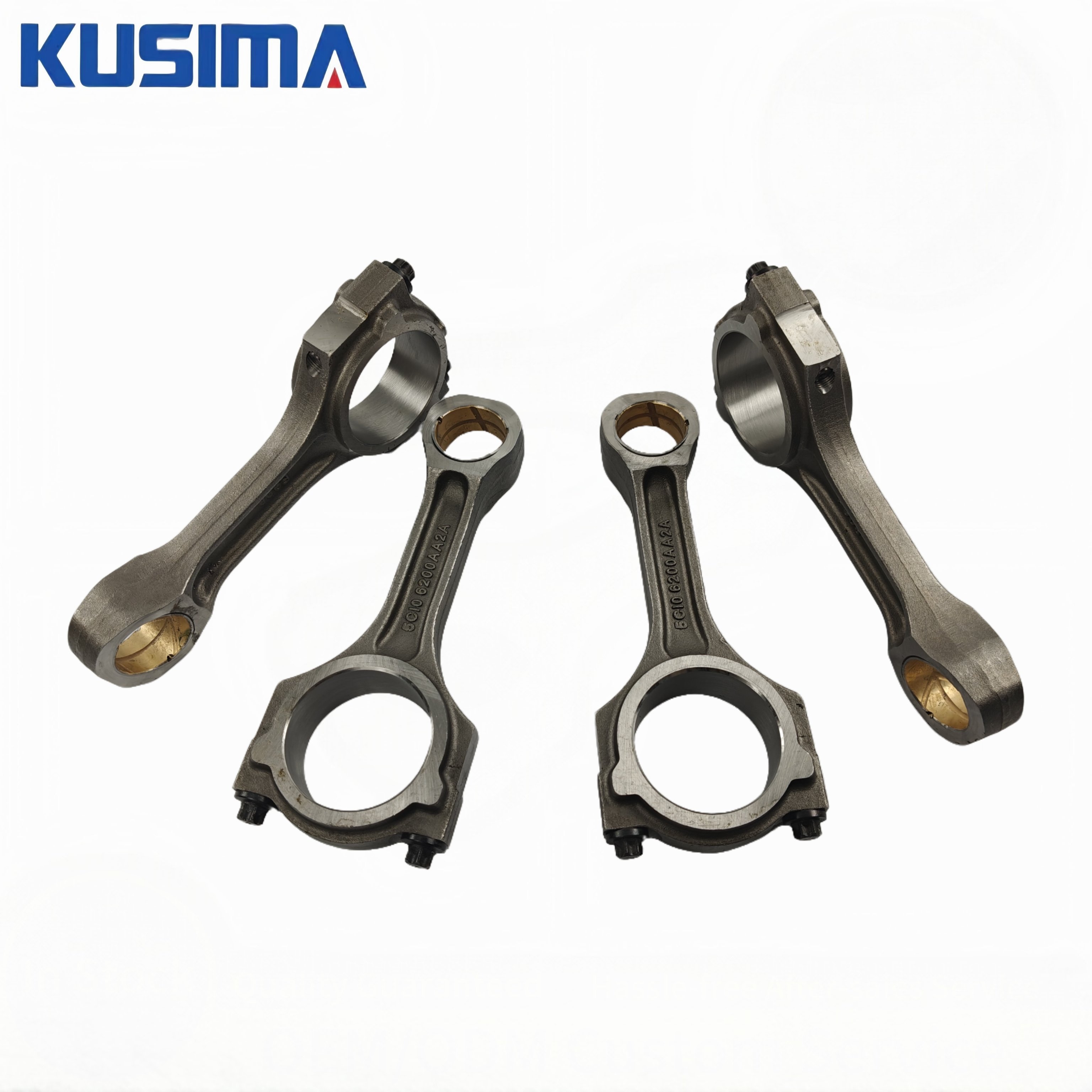
The Connecting Rod is a critical core component of the engine’s crankshaft-connecting rod mechanism, serving as the vital link between the piston and the crankshaft. Its primary function is to convert the reciprocating linear motion of the piston (generated by fuel combustion) into the rotational motion of the crankshaft, thereby transmitting power to the entire powertrain of the vehicle or equipment. As one of the most stressed components in the engine, the Connecting Rod endures high-frequency alternating loads, extreme pressure, and high temperatures during operation, so its quality, precision, and durability directly determine the engine’s power output, operating stability, service life, and safety. Our Connecting Rod is meticulously designed and manufactured to meet the rigorous requirements of various engine types, including gasoline engines, diesel engines, hybrid engines, and even high-performance racing engines, covering a wide range of applications such as passenger cars, commercial vehicles, construction machinery, agricultural machinery, and marine equipment.
Unlike ordinary Connecting Rods on the market, our product integrates advanced material technology, precision machining, and strict quality control, ensuring reliable performance even in long-term high-load and harsh operating environments. Whether it is daily commuting, heavy-duty transportation, or high-intensity work, our Connecting Rod can maintain stable operation, effectively reducing the risk of engine failure caused by Connecting Rod damage (such as bending, breaking, or wear). Adhering to the concept of “precision manufacturing, high durability, and efficient power transmission”, our Connecting Rod has passed numerous industry certifications and vehicle tests, winning widespread recognition from global customers. It not only meets the basic functional requirements of the engine but also helps optimize fuel efficiency and reduce exhaust emissions, aligning with the global trend of energy conservation and environmental protection.
II. Advantage Highlights
1. Exceptional High-Strength Performance: Our Connecting Rod is made of high-quality forged alloy steel (40Cr, 4340, or 20CrMnTi), which has excellent mechanical properties such as high tensile strength, yield strength, and impact toughness. After professional heat treatment, the tensile strength of the Connecting Rod reaches 1200-1500MPa, and the yield strength is over 900MPa, which is 30% higher than that of ordinary cast Connecting Rods. This high-strength performance enables the Connecting Rod to withstand extreme alternating loads and high pressures during engine operation, effectively preventing deformation, bending, or breaking, ensuring the engine’s stable power output.
2. Precise Dimensional Accuracy: The Connecting Rod is processed by advanced precision machining equipment, with strict control over key dimensions such as the inner diameter of the big end and small end, the distance between the two ends (center distance), and the parallelism of the rod body. The dimensional tolerance of the Connecting Rod is controlled within ±0.005mm, and the surface roughness of the bearing hole is Ra≤0.8μm, ensuring perfect matching with the piston pin and crankshaft journal. This precise dimensional accuracy reduces friction between components, improves power transmission efficiency, and extends the service life of the Connecting Rod and related engine parts.
3. Excellent Wear Resistance & Corrosion Resistance: The surface of the Connecting Rod is treated with advanced technologies such as carburizing, quenching, and phosphating. The carburizing and quenching process increases the surface hardness of the Connecting Rod to HRC 58-62, significantly enhancing its wear resistance and fatigue resistance. The phosphating treatment forms a uniform protective film on the surface, effectively preventing rust and corrosion caused by engine oil, high temperature, and moisture, ensuring the Connecting Rod’s long-term stable operation in harsh environments.
4. Lightweight Design & Energy Saving: On the premise of ensuring high strength and durability, our Connecting Rod adopts an optimized structural design (such as hollow rod body, streamlined shape) and lightweight materials, reducing the weight of the Connecting Rod by 10-15% compared with traditional products. The lightweight Connecting Rod reduces the inertial force during engine operation, reduces energy loss, improves fuel efficiency by 5-8%, and also reduces the wear of the crankshaft and piston, further extending the engine’s service life.
5. Wide Adaptability & Perfect Compatibility: Our Connecting Rod covers a full range of models, suitable for engines with displacement from 0.8L to 50L and power from 15kW to 600kW, perfectly matching mainstream engine brands. We also provide customized Connecting Rod solutions according to customer-specific needs (such as special engine models, high-performance requirements), with a professional R&D team to quickly respond to customization needs and ensure the Connecting Rod’s perfect compatibility with the engine.
III. Process Selling Points
1. Strict Raw Material Selection: We have established a strict raw material procurement and inspection system to select high-quality alloy steel from well-known domestic and foreign suppliers. Each batch of raw materials for the Connecting Rod undergoes rigorous chemical composition analysis, mechanical property testing, and flaw detection to ensure that the raw materials meet the design standards and have no defects such as inclusions, cracks, or pores. The high-quality raw materials lay a solid foundation for the excellent performance of the Connecting Rod.
2. Advanced Forging Technology: The Connecting Rod adopts precision forging technology (hot forging + cold finishing), which makes the internal structure of the alloy steel more dense, improves the mechanical properties of the Connecting Rod, and enhances its fatigue resistance and service life. The forging process is controlled by intelligent equipment, ensuring the consistency of the Connecting Rod’s shape and size, reducing the subsequent machining allowance, and improving production efficiency.
3. Precision Machining Process: The Connecting Rod is processed by CNC lathes, CNC milling machines, and precision grinding machines, with a fully automated production line to ensure machining precision and consistency. The key processes (such as boring the big end and small end bearing holes, grinding the rod body) are equipped with online inspection equipment, which can detect dimensional errors in real time and adjust parameters promptly, ensuring that each Connecting Rod meets the strict dimensional requirements. The precision machining process also reduces the surface roughness of the Connecting Rod, improving the fit with other engine components and reducing friction loss.
4. Professional Heat Treatment Process: The Connecting Rod undergoes a strict heat treatment process, including quenching, tempering, and carburizing, which is precisely controlled by intelligent temperature control equipment. This process effectively improves the hardness, toughness, and fatigue resistance of the Connecting Rod, making it capable of withstanding high-frequency alternating loads and high temperatures during long-term operation. The uniform heat treatment ensures that the performance of each part of the Connecting Rod is consistent, avoiding local damage caused by uneven performance.
5. Strict Quality Inspection Process: We have a complete quality inspection system covering the entire production process of the Connecting Rod. From raw material incoming inspection to forging, machining, heat treatment, and final assembly, each link is equipped with professional inspectors and advanced testing equipment (such as flaw detectors, precision measuring instruments). Each finished Connecting Rod undergoes a comprehensive performance test and dimensional inspection, and only products that pass all tests can leave the factory. This strict quality inspection ensures that the quality of each Connecting Rod is stable and reliable, reducing the failure rate of the engine caused by Connecting Rod defects.

 EN
EN