
 EN
EN
Engine Core Parts: Common Faults and Root Causes You Must Know
Mar.24.2026
The engine is the "heart" of a vehicle, and its reliability depends on the coordinated operation of core components. For car owners and maintenance professionals, understanding the common faults and root causes of key engine parts not only helps with timely troubleshooting but also extends the engine's service life. Below, we focus on the failure characteristics and underlying reasons of core parts such as pistons, overhaul kits, timing kits, bearings, connecting rods, crankshafts, and camshafts—providing practical references for your maintenance work.
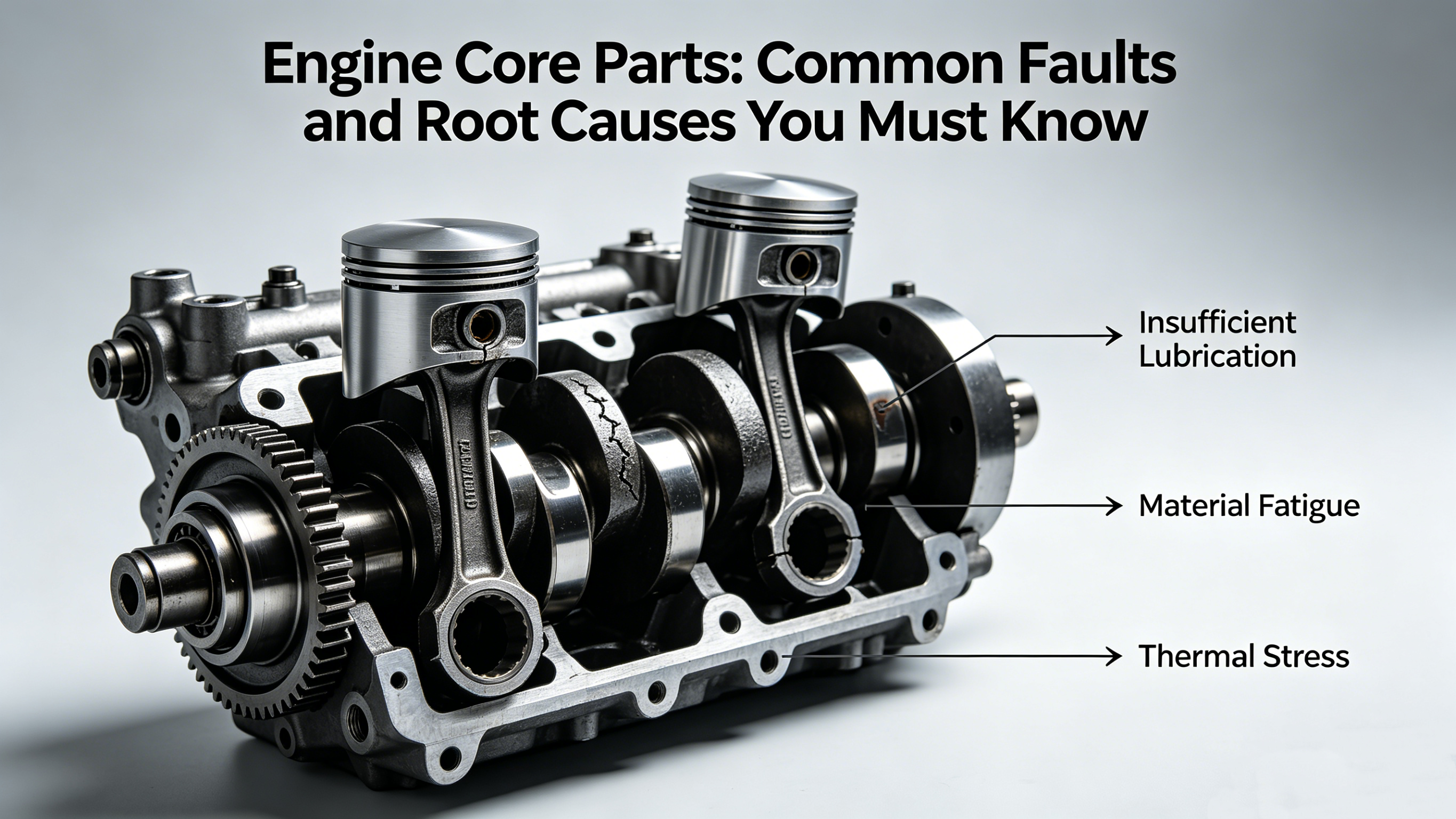
1. Pistons & Piston Rings: Wear and Seal Failure Common Faults: Reduced engine power, increased fuel consumption, blue smoke from exhaust (oil burning), and low cylinder compression. Root Causes: Long-term friction between the piston and cylinder wall leads to wear of the piston skirt and ring groove . Poor lubrication (e.g., infrequent oil changes or low-quality oil) accelerates this process. Cold start abuse: Revving the engine aggressively before it warms up causes dry friction between the piston and cylinder wall, as the oil film hasn’t fully formed . Contaminated fuel or oil: Impurities in fuel or oil scratch the piston surface and wear piston rings, resulting in poor sealing. Overheating: High engine temperatures soften the piston material, increasing wear and even causing piston deformation .
2. Overhaul Kits (Gaskets & Seals): Leakage and Aging Common Faults: Oil leaks, coolant leakage, mixing of oil and coolant, and reduced cylinder pressure. Root Causes: Natural aging: Rubber gaskets (e.g., valve cover gaskets, oil pan gaskets) and seals lose elasticity over time and mileage . Improper installation: Using sealants arbitrarily or uneven bolt torque damages the gasket’s sealing surface . For example, applying silicone sealant on head gaskets creates uneven pressure, leading to leaks. Overheating: High temperatures accelerate the aging and hardening of rubber components, causing cracks and leaks . Contamination: Oil sludge or coolant impurities erode the gasket material, reducing sealing performance.
3. Timing Kits (Timing Belt/Chain, Tensioner): Misalignment and Breakage Common Faults: Engine shaking, abnormal noise, valve-piston collision (severe), and failure to start. Root Causes: Neglected maintenance: Timing belts have a service life of 60,000-100,000 km; aging and cracking occur if not replaced on schedule . Timing chains stretch over time, leading to timing deviation. Tensioner failure: A worn tensioner can’t maintain proper belt/chain tension, causing slippage or noise . Oil contamination: Leaking engine oil soaks the timing belt, accelerating its deterioration. Improper installation: Incorrect timing during assembly leads to misalignment between the crankshaft and camshaft.
4. Bearings (Main Bearings & Connecting Rod Bearings): Abrasion and Burnout Common Faults: Abnormal engine noise (knocking or grinding), low oil pressure, and metal debris in oil. Root Causes: Lubrication failure: Insufficient oil pressure (due to oil pump faults or blocked oil passages) or poor-quality oil breaks the oil film between the bearing and journal, causing dry friction . Improper clearance: Excessive or insufficient bearing clearance affects oil film formation, leading to overheating and wear . Contamination: Metal particles in oil scratch the bearing surface, causing alloy layer detachment . Overloading: Long-term high-load driving (e.g., heavy towing) increases impact loads on bearings, accelerating wear .
5. Connecting Rods & Crankshafts: Bending and Wear Common Faults: Engine vibration, abnormal connecting rod knock, and crankshaft journal scratches. Root Causes: Detonation: Low-octane fuel or incorrect ignition timing causes detonation, generating excessive pressure that bends connecting rods . Bearing failure: Worn bearings cause uneven force on the crankshaft, leading to journal scratches or even crankshaft deformation . Improper installation: Uneven torque on connecting rod bolts leads to loose bearings and abnormal wear . Overheating: High engine temperatures reduce the strength of crankshaft and connecting rod materials, increasing the risk of deformation.
6. Camshafts, Hydraulic Lifters & Rockers: Wear and Abnormal Noise Common Faults: Valve train noise ("clattering"), reduced engine power, and irregular idle. Root Causes: Camshaft wear: Long-term contact with valves causes wear on cam lobes, reducing valve lift . Poor lubrication or contaminated oil accelerates this process. Hydraulic lifter failure: Dirt or oil sludge clogs the lifter, causing poor oil pressure and abnormal noise . Rocker arm wear: Excessive clearance between the rocker arm and valve stem leads to impact wear, affecting valve timing . Timing deviation: Faulty timing kits cause mismatched camshaft and crankshaft rotation, increasing wear on the valve train.
7. Oil Pumps & Water Pumps: Loss of Efficiency and Leakage Common Faults: Oil pump: Low oil pressure, poor acceleration, and engine overheating . Water pump: Coolant leakage, engine overheating, and bearing noise . Root Causes: Oil pump: Internal wear (e.g., rotor or gear wear) reduces oil pressure; clogged oil filters or oil passages affect oil circulation . Water pump: Seal aging causes coolant leakage; bearing wear leads to noise and reduced water circulation efficiency . Neglected coolant replacement causes corrosion and blockage.
8. Valves: Seal Failure and Burnout Common Faults: Reduced cylinder pressure, exhaust smoke, and valve train noise. Root Causes: Valve seat wear: Long-term high-temperature combustion erodes the valve seat, leading to poor sealing . Valve stem seal aging: Worn seals allow oil to enter the combustion chamber, causing oil burning and carbon buildup . Detonation or overheating: Excessive combustion temperatures burn valves, causing deformation or burnout . Carbon buildup: Unburned fuel and oil form carbon deposits on valves, affecting valve opening and closing. Prevention and Maintenance Suggestions Adhere to regular maintenance: Replace engine oil, filters, timing kits, and overhaul kits on schedule . Use high-quality fluids: Choose engine oil, coolant, and fuel that meet manufacturer specifications to avoid component damage . Avoid abusive driving: Warm up the engine before driving, avoid frequent acceleration and overloading, and shut down the engine after idling for 1-2 minutes (especially for turbocharged engines) . Timely troubleshooting: Address abnormal noises, leaks, or warning lights promptly to prevent minor issues from escalating into major failures.
Conclusion Engine faults are often caused by a combination of factors, with neglected maintenance, poor-quality parts, and abusive driving being the main culprits. By understanding the common faults and root causes of core components, car owners and maintenance professionals can take targeted preventive measures. Choosing high-quality replacement parts (e.g., pistons, overhaul kits, timing kits) and following proper installation procedures are key to ensuring engine reliability. If you encounter complex engine problems, consult professional technicians for diagnosis and repair to avoid further damage.
1. Pistons & Piston Rings: Wear and Seal Failure Common Faults: Reduced engine power, increased fuel consumption, blue smoke from exhaust (oil burning), and low cylinder compression. Root Causes: Long-term friction between the piston and cylinder wall leads to wear of the piston skirt and ring groove . Poor lubrication (e.g., infrequent oil changes or low-quality oil) accelerates this process. Cold start abuse: Revving the engine aggressively before it warms up causes dry friction between the piston and cylinder wall, as the oil film hasn’t fully formed . Contaminated fuel or oil: Impurities in fuel or oil scratch the piston surface and wear piston rings, resulting in poor sealing. Overheating: High engine temperatures soften the piston material, increasing wear and even causing piston deformation .
2. Overhaul Kits (Gaskets & Seals): Leakage and Aging Common Faults: Oil leaks, coolant leakage, mixing of oil and coolant, and reduced cylinder pressure. Root Causes: Natural aging: Rubber gaskets (e.g., valve cover gaskets, oil pan gaskets) and seals lose elasticity over time and mileage . Improper installation: Using sealants arbitrarily or uneven bolt torque damages the gasket’s sealing surface . For example, applying silicone sealant on head gaskets creates uneven pressure, leading to leaks. Overheating: High temperatures accelerate the aging and hardening of rubber components, causing cracks and leaks . Contamination: Oil sludge or coolant impurities erode the gasket material, reducing sealing performance.
3. Timing Kits (Timing Belt/Chain, Tensioner): Misalignment and Breakage Common Faults: Engine shaking, abnormal noise, valve-piston collision (severe), and failure to start. Root Causes: Neglected maintenance: Timing belts have a service life of 60,000-100,000 km; aging and cracking occur if not replaced on schedule . Timing chains stretch over time, leading to timing deviation. Tensioner failure: A worn tensioner can’t maintain proper belt/chain tension, causing slippage or noise . Oil contamination: Leaking engine oil soaks the timing belt, accelerating its deterioration. Improper installation: Incorrect timing during assembly leads to misalignment between the crankshaft and camshaft.
4. Bearings (Main Bearings & Connecting Rod Bearings): Abrasion and Burnout Common Faults: Abnormal engine noise (knocking or grinding), low oil pressure, and metal debris in oil. Root Causes: Lubrication failure: Insufficient oil pressure (due to oil pump faults or blocked oil passages) or poor-quality oil breaks the oil film between the bearing and journal, causing dry friction . Improper clearance: Excessive or insufficient bearing clearance affects oil film formation, leading to overheating and wear . Contamination: Metal particles in oil scratch the bearing surface, causing alloy layer detachment . Overloading: Long-term high-load driving (e.g., heavy towing) increases impact loads on bearings, accelerating wear .
5. Connecting Rods & Crankshafts: Bending and Wear Common Faults: Engine vibration, abnormal connecting rod knock, and crankshaft journal scratches. Root Causes: Detonation: Low-octane fuel or incorrect ignition timing causes detonation, generating excessive pressure that bends connecting rods . Bearing failure: Worn bearings cause uneven force on the crankshaft, leading to journal scratches or even crankshaft deformation . Improper installation: Uneven torque on connecting rod bolts leads to loose bearings and abnormal wear . Overheating: High engine temperatures reduce the strength of crankshaft and connecting rod materials, increasing the risk of deformation.
6. Camshafts, Hydraulic Lifters & Rockers: Wear and Abnormal Noise Common Faults: Valve train noise ("clattering"), reduced engine power, and irregular idle. Root Causes: Camshaft wear: Long-term contact with valves causes wear on cam lobes, reducing valve lift . Poor lubrication or contaminated oil accelerates this process. Hydraulic lifter failure: Dirt or oil sludge clogs the lifter, causing poor oil pressure and abnormal noise . Rocker arm wear: Excessive clearance between the rocker arm and valve stem leads to impact wear, affecting valve timing . Timing deviation: Faulty timing kits cause mismatched camshaft and crankshaft rotation, increasing wear on the valve train.
7. Oil Pumps & Water Pumps: Loss of Efficiency and Leakage Common Faults: Oil pump: Low oil pressure, poor acceleration, and engine overheating . Water pump: Coolant leakage, engine overheating, and bearing noise . Root Causes: Oil pump: Internal wear (e.g., rotor or gear wear) reduces oil pressure; clogged oil filters or oil passages affect oil circulation . Water pump: Seal aging causes coolant leakage; bearing wear leads to noise and reduced water circulation efficiency . Neglected coolant replacement causes corrosion and blockage.
8. Valves: Seal Failure and Burnout Common Faults: Reduced cylinder pressure, exhaust smoke, and valve train noise. Root Causes: Valve seat wear: Long-term high-temperature combustion erodes the valve seat, leading to poor sealing . Valve stem seal aging: Worn seals allow oil to enter the combustion chamber, causing oil burning and carbon buildup . Detonation or overheating: Excessive combustion temperatures burn valves, causing deformation or burnout . Carbon buildup: Unburned fuel and oil form carbon deposits on valves, affecting valve opening and closing. Prevention and Maintenance Suggestions Adhere to regular maintenance: Replace engine oil, filters, timing kits, and overhaul kits on schedule . Use high-quality fluids: Choose engine oil, coolant, and fuel that meet manufacturer specifications to avoid component damage . Avoid abusive driving: Warm up the engine before driving, avoid frequent acceleration and overloading, and shut down the engine after idling for 1-2 minutes (especially for turbocharged engines) . Timely troubleshooting: Address abnormal noises, leaks, or warning lights promptly to prevent minor issues from escalating into major failures.
Conclusion Engine faults are often caused by a combination of factors, with neglected maintenance, poor-quality parts, and abusive driving being the main culprits. By understanding the common faults and root causes of core components, car owners and maintenance professionals can take targeted preventive measures. Choosing high-quality replacement parts (e.g., pistons, overhaul kits, timing kits) and following proper installation procedures are key to ensuring engine reliability. If you encounter complex engine problems, consult professional technicians for diagnosis and repair to avoid further damage.