
 EN
EN
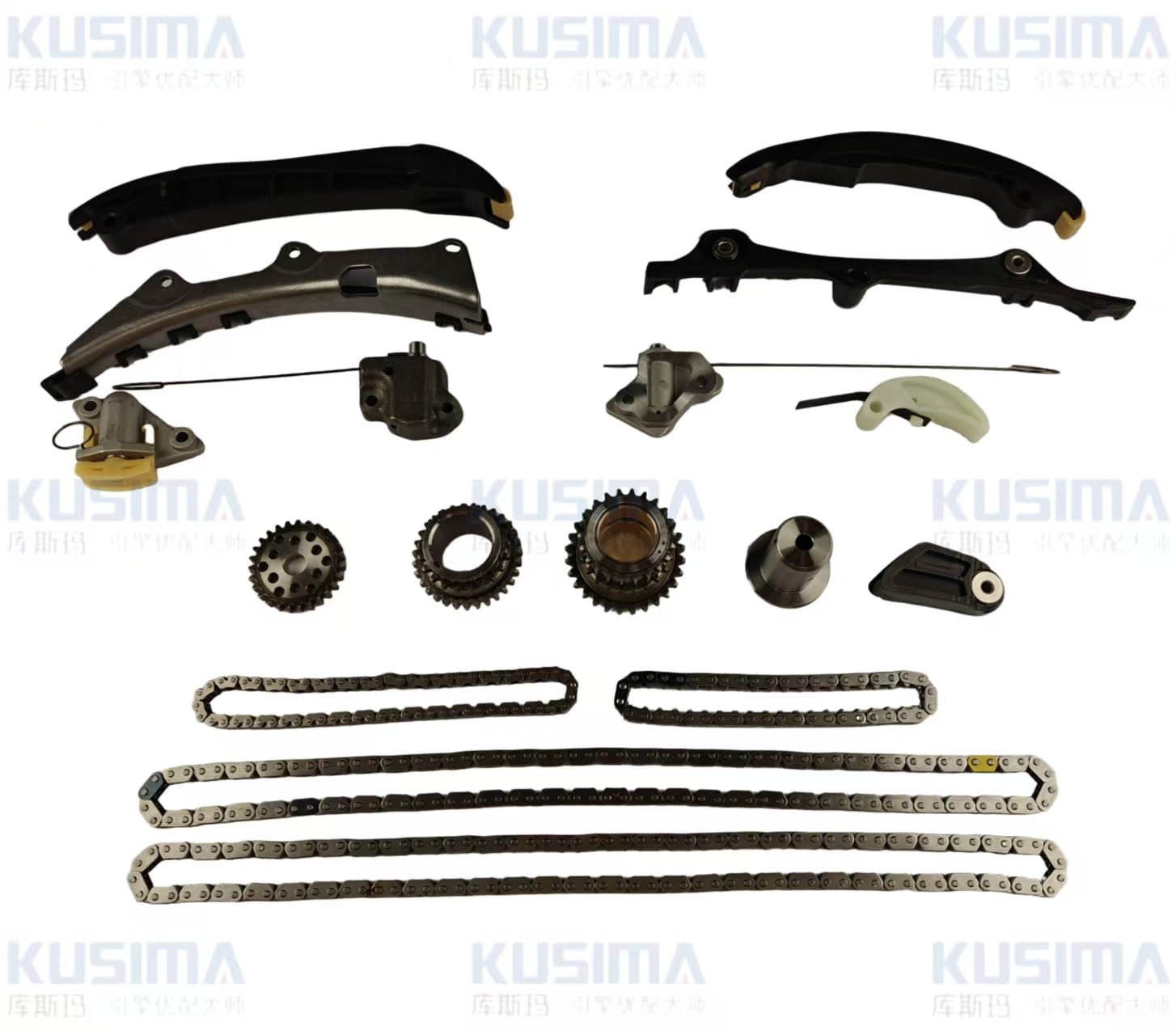
The Component That Keeps Valves and Pistons From Meeting
An engine's timing chain does one job, but it does it with zero margin for error. Keep the crankshaft and camshafts rotating in perfect sync, or the whole thing comes apart—literally. When a timing chain stretches, skips, or breaks, valves collide with pistons. The repair bill often exceeds the value of the vehicle. That's why the quality of a timing chain kit matters far more than its price tag suggests.
A study of 78 post-sale engine timing system failures found that tensioners and chains were the components with the highest failure rates. That finding aligns with what shop floors have known for years: the chain itself and the part that keeps it tight are the weak links. A complete timing chain kit addresses both, along with guides, sprockets, and often VVT units and seals. But a kit is only as good as the components inside it.
What Actually Fails in a Timing System
Timing chain failure doesn't happen without warning, but the warnings are easy to ignore. A rattle on cold start, rough idle, or a check engine light with camshaft correlation codes—these are the early signals. Left unaddressed, a stretched chain throws off valve timing. The engine management system tries to compensate, but there's only so much adjustment available. Eventually, the chain skips a tooth or breaks entirely.
The failure chain usually starts with the tensioner. Oil pressure actuates the tensioner, which keeps the chain at proper tightness. When the tensioner wears or the check valve fails, the chain goes slack during startup. That slack allows the chain to slap against guides, wearing them down. Metal debris from the guides circulates through the oil system, accelerating wear on the tensioner and chain. It's a cascade. A high-quality timing chain kit breaks that cascade by using better materials and tighter tolerances from the start.
The Cost of Cutting Corners on Chain Kits
A shop in the Pacific Northwest learned this lesson the hard way. A customer brought in a 3.6L Pentastar-equipped Jeep with a timing chain rattle. The shop installed an economy-grade timing chain kit from an online discount supplier. Six thousand miles later, the chain stretched beyond specification. The engine jumped timing, bent four exhaust valves, and required a cylinder head rebuild. Total cost to the shop: parts, labor, and goodwill—north of $4,500. The original economy kit had cost $180.
That's not an isolated incident. Timing chain failures can cause catastrophic engine damage, with repair costs sometimes reaching $6,000 or more. Premium timing chain kits, manufactured to OE specifications, typically cost two to three times the price of economy alternatives. But they also include components that meet ISO 9001:2015 and IATF 16949 standards for strength, thermal stability, and durability. The difference isn't marketing—it's metallurgy.
Material Quality That Shows Up in the Long Run
The chain itself deserves close attention. High-quality timing chains use pre-elongated alloy steel. Pre-elongation means the chain has been run through a stress-relief process before assembly, so most of the initial stretch happens at the factory, not in the customer's engine. Hardened sprockets resist wear from the chain's constant meshing. Low-friction guides reduce parasitic drag and extend guide life.
Tensioners in premium kits feature improved check valves and more robust spring design. The oil feed passages are machined to tighter tolerances, ensuring consistent pressure delivery even at low RPM. Seals and gaskets included in the kit are formulated to resist the heat and chemical attack of modern engine oils.
One independent test compared chain elongation after 100,000 simulated miles across three kit tiers. The economy chain stretched 0.8%. The mid-tier chain stretched 0.4%. The premium chain, with pre-elongated alloy steel, stretched just 0.15%. That difference in elongation translates directly to timing accuracy over the life of the engine.
Installation Matters as Much as the Parts
Even the best timing chain kit won't perform if installation is rushed. Proper torque sequencing on the camshaft sprocket bolts, correct tensioner pre-load procedure, and verifying timing marks before rotating the engine—these steps are non-negotiable. A complete timing chain kit includes all necessary components: tensioners, guides, sprockets, VVT units, and seals. Having everything in one box reduces the chance of missing a critical part.
| Factor | Economy Timing Chain Kit | Premium Timing Chain Kit |
|---|---|---|
| Chain material | Standard carbon steel | Pre-elongated alloy steel |
| Chain stretch @100k miles | 0.6-0.8% | 0.15-0.25% |
| Tensioner design | Basic spring/oil check | Improved check valve + robust spring |
| Sprocket hardness | Standard heat treat | Deep-case hardened |
| Guide material | Standard polymer | Low-friction, high-temp polymer |
| Typical service life | 60k-80k miles | 100k-150k+ miles |
Beyond the Chain: What the Rest of the Kit Delivers
A timing chain kit isn't just a chain and a few sprockets. The VVT (variable valve timing) units, where applicable, must respond precisely to oil pressure commands. Sluggish VVT response affects power delivery and fuel economy. Guides must maintain chain trajectory under all operating conditions, from freezing cold starts to sustained high-load operation. Seals and gaskets prevent oil leaks that would starve the tensioner of pressure.
When a kit includes all these components, matched and tested as a system, the probability of premature failure drops significantly. That's the value proposition of a complete, high-quality timing chain kit—not just better individual parts, but parts engineered to work together.
Recognizing the Limitations
No timing chain kit is immortal. Even the best chain will eventually stretch, and even the best tensioner will eventually wear. High-mileage engines with sludge buildup or oil pressure issues can shorten the life of any timing system component. Regular oil changes with the correct viscosity are essential. Neglected maintenance will defeat even the most premium hardware.
The economics of timing chain replacement favor quality. Labor to access the timing chain on a modern transverse V6 can run eight to twelve hours. Using a premium kit adds maybe $200 to $300 to the parts cost compared to an economy alternative. Spreading that difference over 100,000 miles of service—it's less than a cent per mile. The alternative, doing the job twice, costs far more.
Manufacturers like Hebei Haodun Auto Parts Sales Co., Ltd. supply complete timing chain kits engineered to OE specifications, with components manufactured under quality systems that meet international standards. With over two decades of production experience and a global distribution network spanning Europe, the Americas, the Middle East, and Southeast Asia, the company's timing chain kits reflect the kind of manufacturing discipline that comes from serving diverse markets with demanding quality requirements.
Table of Contents
- The Component That Keeps Valves and Pistons From Meeting
- What Actually Fails in a Timing System
- The Cost of Cutting Corners on Chain Kits
- Material Quality That Shows Up in the Long Run
- Installation Matters as Much as the Parts
- Beyond the Chain: What the Rest of the Kit Delivers
- Recognizing the Limitations