
 EN
EN
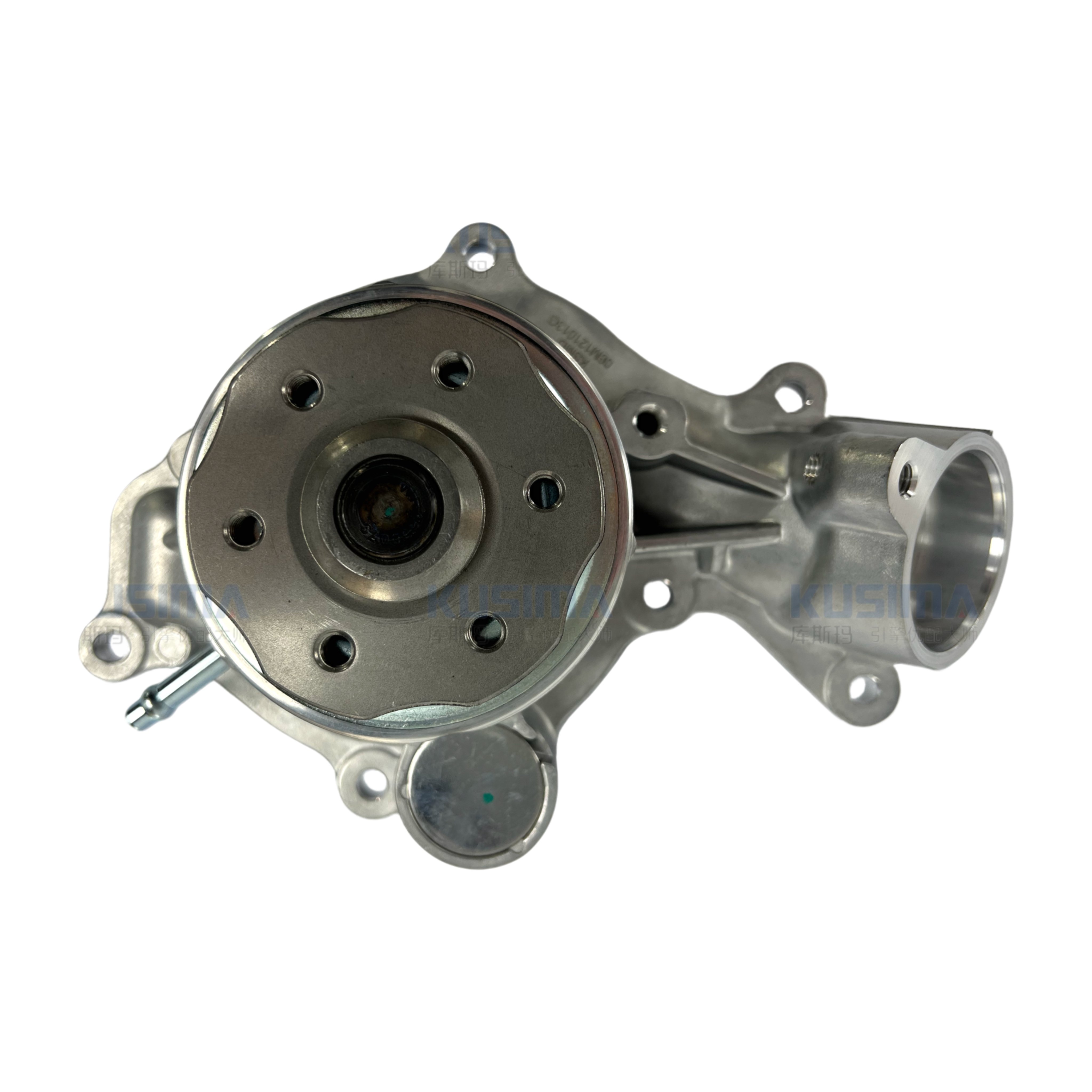
More Than Just Moving Coolant Around
An engine is a heat engine—it converts chemical energy into mechanical work by creating heat and then harnessing the expansion of gases. But that same heat, if left unchecked, will destroy the engine from the inside out. Pistons seize, cylinder heads warp, gaskets fail, and oil breaks down into varnish. The cooling system exists to prevent all of that, and at the heart of that system are two components that have to work in perfect sync: the water pump and the thermostat.
The water pump is the workhorse. It moves coolant through the engine block, cylinder heads, heater core, and radiator. The thermostat is the gatekeeper. It decides when and how much of that coolant gets routed through the radiator to shed heat to the atmosphere. Neither one can do its job properly without the other. A pump that moves coolant too fast or too slow, combined with a thermostat that opens too early or too late, creates temperature swings that reduce efficiency, increase emissions, and shorten engine life.
The Thermostat’s Job: Not Just Open and Close
Most people think a thermostat is a simple on-off switch—cold means closed, hot means open. The reality is more nuanced. A wax-pellet thermostat contains a sealed chamber filled with a wax compound that expands when heated. As the engine warms up, the expanding wax pushes a piston that gradually opens a valve against spring pressure. The opening is progressive, not binary.
This progressive action is critical for temperature stability. If the thermostat snapped open all at once, a surge of cold coolant from the radiator would hit the engine, causing thermal shock and a sudden drop in temperature that would then snap the thermostat closed again. The result would be a cycling oscillation—overheat, cool down, overheat again—that is hard on gaskets, cylinder heads, and the thermostat itself. The wax pellet design smooths out this transition, allowing the thermostat to modulate flow continuously as temperature changes.
The thermostat also serves a less obvious but equally important function during cold starts. By blocking coolant flow to the radiator, it forces the engine to warm up quickly. A cold engine runs rich, wastes fuel, and produces higher emissions. Getting the engine to operating temperature as fast as possible reduces fuel consumption and minimizes bore wear. SAE research has shown that optimized thermostat control can improve both efficiency and emissions by managing warm-up time more effectively. In modern systems, the engine control unit monitors coolant temperature and can set diagnostic trouble codes if the warm-up rate falls outside expected parameters—typically if the engine takes more than about five to ten minutes to reach operating temperature.
The Water Pump’s Role: Volume, Pressure, and Speed
The water pump is almost always a centrifugal pump driven by a belt from the crankshaft. An impeller inside the pump housing spins at engine speed, flinging coolant outward by centrifugal force and creating a low-pressure zone at the center that draws in more coolant from the radiator. The faster the engine turns, the faster the pump spins, and the more coolant it moves.
This direct relationship between engine speed and coolant flow creates an inherent mismatch. At idle, the pump moves relatively little coolant, which is fine because the engine is not making much heat. At high rpm, the pump moves a lot of coolant, which is also fine because the engine is making a lot of heat. But the relationship is not linear, and at very high rpm, the pump can actually move coolant too fast for the radiator to effectively shed heat. There is also the problem of cavitation—if the pump spins too fast, the low-pressure zone at the impeller center can drop below the vapor pressure of the coolant, forming bubbles that collapse violently and erode the impeller.
The thermostat compensates for some of these mismatches by restricting flow when the engine is cold and allowing full flow when it is hot. But the pump’s speed is still tied to engine rpm, which means the cooling system is always a compromise between idle cooling capacity and high-rpm flow characteristics. Electric water pumps, which can run independently of engine speed, are becoming more common in high-performance and hybrid applications precisely because they decouple flow rate from rpm.
How They Work Together: The Bypass Loop
The real genius of the cooling system is in the bypass circuit. When the thermostat is closed, coolant does not stop moving. It circulates through a bypass passage that routes coolant from the engine back to the water pump inlet without going through the radiator. This allows the pump to keep coolant moving through the engine block and cylinder heads even while the engine is warming up, ensuring even temperature distribution and preventing localized hot spots.
As the engine reaches operating temperature—typically somewhere around 160°F to 197°F (71°C to 92°C) depending on the design—the thermostat begins to open. Coolant now has two paths: the bypass route and the radiator route. As the thermostat opens further, more coolant flows through the radiator, where it sheds heat to the passing air. The thermostat continuously adjusts its position based on coolant temperature, balancing the flow between the bypass and the radiator to maintain a stable operating temperature.
This closed-loop control happens entirely without electronics in a traditional system. The wax pellet responds directly to coolant temperature, making the thermostat a self-contained mechanical controller. It is remarkably effective—most production engines maintain coolant temperature within a narrow window of roughly 10°F under steady-state conditions. The pump provides the flow, the thermostat directs it, and the engine stays happy.
When Things Go Wrong: A Field Example
A fleet operator in the Southwest ran a mixed fleet of light trucks that spent a lot of time in stop-and-go city traffic during summer months. The shop started noticing a pattern: trucks that had recently had their cooling systems serviced were running cooler than expected, and fuel economy had dropped by a noticeable margin across the board. The culprit turned out to be thermostats that had been replaced with lower-temperature units in an attempt to “help” the engine run cooler in the heat.
The lower-temperature thermostats were opening too early, allowing coolant to flow through the radiator before the engine had reached its designed operating temperature. The result was an engine that never fully warmed up, running at around 150°F instead of the specified 195°F. The engine control unit responded by keeping the fuel mixture rich to compensate for the cold engine, which drove fuel consumption up and caused excessive carbon buildup in the combustion chambers. The solution was to reinstall the correct temperature thermostats and verify that the water pumps were producing adequate flow at idle—which they were.
This case illustrates a fundamental point: the cooling system is designed as a package. Changing one component without understanding how it interacts with the rest of the system often makes things worse, not better. The thermostat and water pump are tuned to work together within a specific temperature range, and deviating from that range has consequences that ripple through the entire engine.
Material Quality and Manufacturing Precision Matter
The reliability of the cooling system depends heavily on the quality of its components. A water pump with an impeller that is out of balance or cast with porosity will vibrate, cavitate, and fail prematurely. A thermostat with inconsistent wax composition or a poorly machined valve seat will open at the wrong temperature or fail to seal properly when closed. These are not theoretical concerns—they show up in the field as overheating complaints, check engine lights, and shortened component life.
Precision manufacturing matters at every step. Impeller geometry, bearing preload, shaft runout, and seal quality all determine how long a water pump will last and how consistently it will perform. Similarly, thermostat calibration requires tight control over the wax formulation and the mechanical assembly to ensure that the opening temperature stays within specification across production batches.
Companies that specialize in engine components, such as Hebei Haodun, apply rigorous quality control to these parts, recognizing that the cooling system is not an afterthought—it is essential to engine durability and performance. A water pump that moves the right volume of coolant at the right pressure, paired with a thermostat that opens at the right temperature, keeps the engine in its optimal operating window mile after mile. And that is what separates a reliable powertrain from one that spends too much time on the hoist.