
 EN
EN
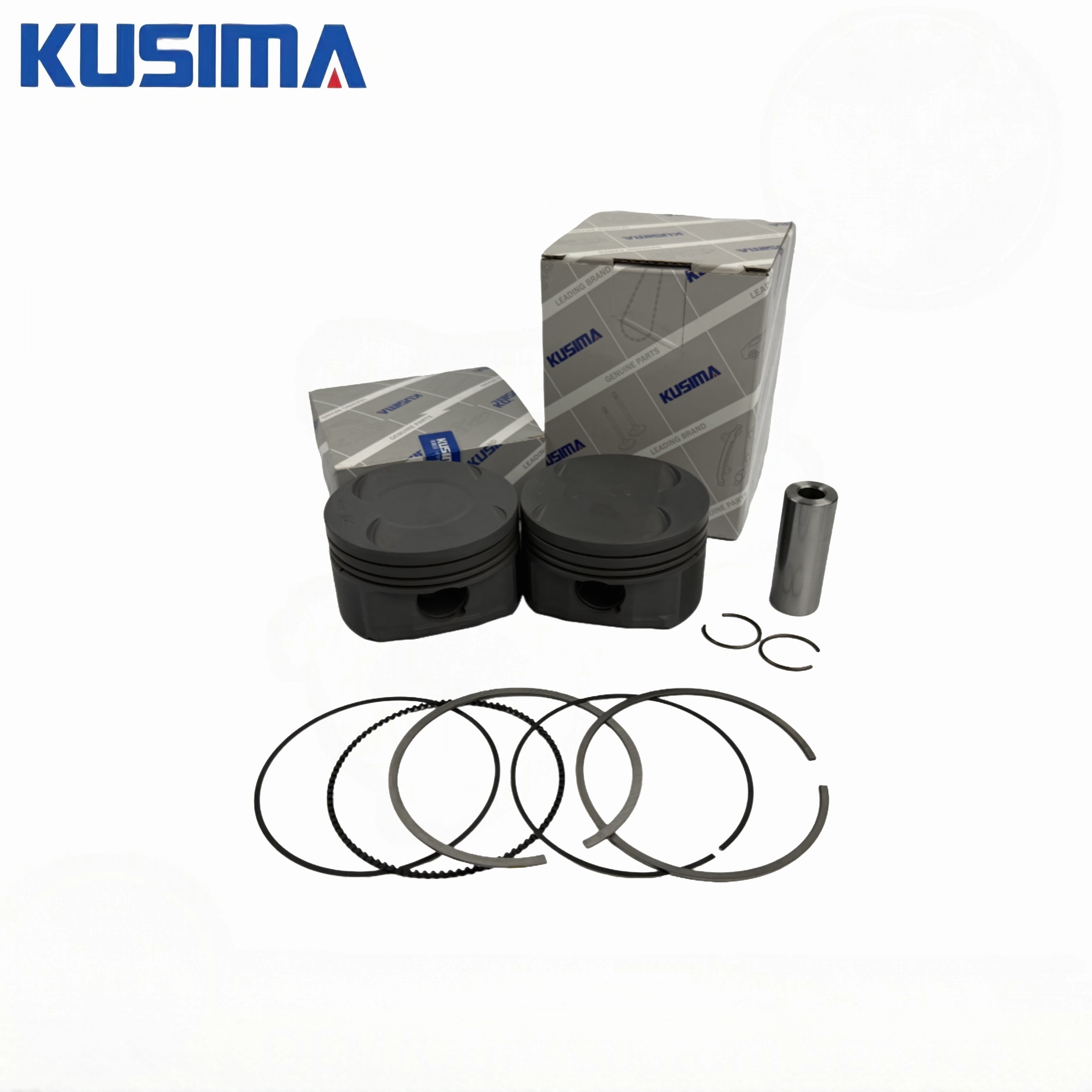
The Real Challenge Behind Bulk Piston Sourcing
Sourcing pistons from Chinese manufacturers in volume isn't just about finding the lowest price per unit. The real question is whether those pistons will hold up across thousands of operating hours without causing premature wear, scoring, or—in the worst case—catastrophic engine failure. A single bad batch can wipe out months of margin and damage relationships with end customers who expect reliability.
The aftermarket piston landscape in China has matured considerably over the past decade. Manufacturing clusters in Hebei, Zhejiang, and Guangdong have developed integrated supply chains that combine raw material access with precision machining capabilities. But maturity doesn't guarantee consistency across every supplier. The gap between a top-tier operation and a low-cost workshop can be substantial, and that gap shows up in the finished product.
Material Composition Tells the Real Story
Aluminum alloy selection is the first place to look when evaluating piston quality. High-silicon aluminum alloys like A390 offer excellent wear resistance and dimensional stability under high combustion loads. The silicon content affects how the piston handles thermal expansion and scuffing during cold starts—two conditions that separate durable pistons from short-lived ones.
Chinese industry standards such as QC/T 552-2025 for cast aluminum pistons and QC/T 283-2025 for wear-ring pistons establish baseline requirements for material composition and mechanical properties. A supplier that can reference these standards and provide documentation on alloy type, heat treatment specifications, and skirt coating is already ahead of one that cannot.
A quick check: ask about the specific aluminum alloy used. If the answer is vague—"standard aluminum" or "industry grade"—that's a red flag. Serious manufacturers specify alloys like A390, 4032, or 2618 and can explain why they chose that particular composition for the application.
Dimensional Tolerance Separates the Professionals
Pistons are precision components. The clearance between piston and cylinder wall typically falls within tenths of a millimeter. Too tight, and the piston seizes as it expands under heat. Too loose, and you get piston slap, oil consumption, and accelerated ring wear.
Top-tier Chinese manufacturers maintain tolerances around ±0.01mm on critical dimensions like skirt diameter and pin bore. They use coordinate measuring machines (CMMs) for in-process inspection and final verification. Less capable shops rely on manual gauging or skip inspection altogether on high-volume runs.
| Quality Indicator | Tier 1 Manufacturer | Tier 2/3 Manufacturer |
|---|---|---|
| Dimensional tolerance | ±0.01mm on critical features | ±0.03–0.05mm |
| Inspection method | CMM with statistical process control | Manual gauging, spot checks |
| Hardness testing | 100% batch testing (HB 80–100 typical) | Random or skipped |
| Surface finish | Ra 0.2–0.4μm | Ra 0.6μm |
| Coating application | Controlled thickness, verified | Inconsistent or absent |
A workshop in Guangdong once sent a batch of pistons with skirt diameters varying by nearly 0.08mm across a single pallet. The customer discovered the issue only after assembling fifty engines—fifty engines that had to be torn down and reassembled. That kind of variability doesn't show up in a glossy product catalog. It shows up on the shop floor, where time and money disappear.
Process Control Matters More Than Final Inspection
Final inspection catches defects. Process control prevents them from happening in the first place. A supplier with robust process controls monitors casting temperature, cooling rates, heat treatment cycles, and machining parameters at every stage. They document deviations and take corrective action before parts move to the next operation.
Look for evidence of internal quality processes: non-destructive testing (NDT) for casting porosity, hardness testing on every batch, and surface finish verification. ISO 9001 certification is a useful starting point, but real-world performance indicators often provide clearer insights. On-time delivery rates above 95% and reorder rates exceeding 20% signal operational discipline that usually correlates with consistent quality.
Some suppliers in Hebei maintain internal foundries and heat-treatment lines, allowing them to control material quality from the melt onward. That vertical integration reduces the variability that comes from outsourcing critical processes to subcontractors.
Documentation and Traceability Are Non-Negotiable
For bulk orders, traceability isn't optional. Each batch should have documented test results covering hardness, dimensional conformance, and surface finish. The documentation should tie back to specific production runs so that if an issue emerges downstream, the root cause can be identified and contained.
Request a sample quality pack before placing a large order. It should include material certifications, inspection reports, and, ideally, third-party test results. A supplier that hesitates to provide this documentation—or provides incomplete information—is signaling something about their internal systems.
The T/CAAMTB 176-2023 standard for piston component quality characteristics and importance grading provides a framework for what should be documented and how. Suppliers familiar with this standard are likely to have more structured quality systems than those who are not.
Red Flags That Warrant a Second Look
Certain behaviors during the sourcing process deserve extra scrutiny. A supplier who quotes significantly below market average without a clear explanation—such as different material grade or simpler coating—is probably cutting corners somewhere. A supplier who promises unrealistic lead times for a first bulk order may be planning to rush production at the expense of quality.
Another red flag: reluctance to share internal inspection data or to allow a third-party inspection during production. Reputable manufacturers welcome transparency because their processes can withstand scrutiny.
The most reliable suppliers treat quality as a system, not a checkpoint. They invest in measurement equipment, train operators, and maintain documentation because they understand that bulk buyers are betting their reputation on every shipment. For buyers sourcing from China's engine parts sector, Hebei Haodun represents one such operation—with internal casting and heat-treatment capabilities that support consistent quality across volume orders.