
 EN
EN
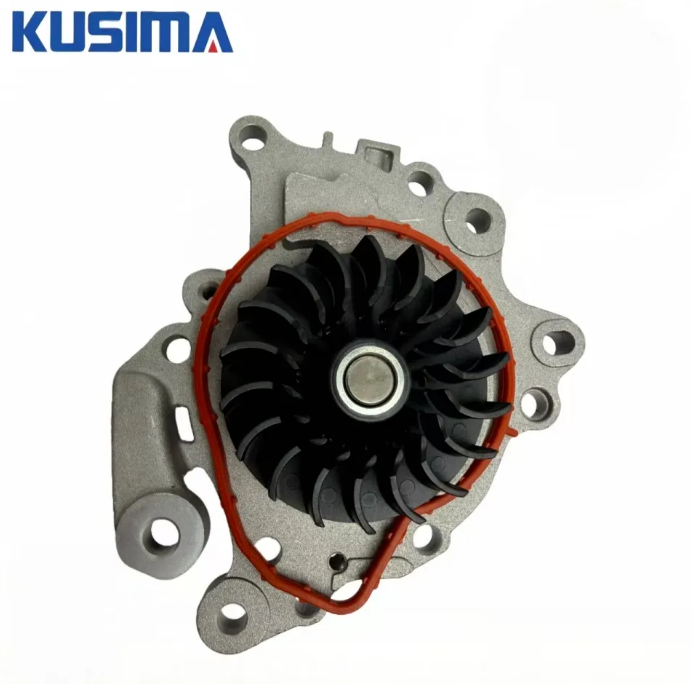
The One Component That Keeps the Whole Thing From Melting Down
Walk into any repair shop and ask the senior tech what kills more passenger car engines than anything else. Overheating will be at the top of the list every time. And right at the heart of that problem sits the water pump — a deceptively simple component that moves coolant through the block, heads, and radiator. When it fails, temperatures climb fast. Industry data shows that cooling system failures account for roughly 40 percent of engine-related breakdowns, with water pump malfunctions representing the primary cause in nearly half of those cases. That puts the water pump front and center in any conversation about engine longevity.
But choosing the right one isn't as straightforward as grabbing whatever fits the bolt pattern. There's material selection, impeller design, drive mechanism, and cooling capacity to weigh. Get any of these wrong, and the engine pays the price — sometimes within a few thousand miles.
Material Choice Isn't Just About Cost
The casting versus forging debate shows up everywhere in engine parts, and water pumps are no exception. Most aftermarket pumps use cast iron or aluminum alloy housings with stamped steel or cast impellers. Cast iron handles heat cycling well and dampens vibration, but it adds weight. Aluminum dissipates heat faster and sheds pounds, which matters for modern lightweight engine designs. Either material works fine when the casting quality is consistent and the machining is precise.
The real differentiator often comes down to the impeller and the seal. Cheap pumps use plastic impellers that can crack or separate from the shaft over time. Once that happens, coolant flow drops to near zero, and overheating follows quickly. A well-made pump uses a precision-cast or machined impeller — typically aluminum or reinforced composite — secured to the shaft with a mechanical lock rather than just pressed on. The seal assembly matters just as much. Ceramic sealing faces paired with high-temperature elastomers hold up far better than basic rubber and carbon combinations. Seal failure accounts for an estimated 60 to 70 percent of premature water pump replacements, so this is one area where cutting corners rarely pays off.
Flow Rate and Cooling Capacity — Bigger Isn't Always Better
Here's a common mistake: assuming that more flow equals better cooling. That logic breaks down fast. An oversized pump moves coolant through the radiator too quickly, leaving insufficient time for heat to transfer from the coolant to the ambient air. The result? Higher operating temperatures despite all that extra flow. Conversely, an undersized pump fails to move enough volume at idle or low RPM, allowing hot spots to develop in the cylinder head.
The right pump matches the engine's specific cooling system design — radiator size, thermostat opening characteristics, and the total volume of the coolant circuit. A typical passenger car water pump moves between 15 and 30 gallons of coolant per minute depending on engine size and operating conditions. But that number means nothing without context. A 2.0-liter turbo four doesn't need the same flow as a 5.0-liter V8, and high-performance engines with tighter tolerances often require higher pressure capability alongside adequate volume. Matching the pump's performance curve to the engine's thermal load profile is the only way to ensure consistent temperature control across the full operating range.
Drive Mechanism and Fitment — The Details That Bite You Later
Water pumps come in two primary drive configurations: belt-driven and directly mounted to the timing system. Belt-driven pumps are simpler to replace but rely on proper belt tension and alignment. Timing-mounted pumps — increasingly common on modern overhead-cam engines — are driven by the timing belt or chain. These tend to be more expensive and more labor-intensive to replace, but they offer precise speed control tied directly to engine RPM.
Fitment goes beyond just bolting the pump to the block. The pump's inlet and outlet orientation must match the existing coolant hose routing. The bypass port — if the engine uses one — needs to align correctly with the block's casting. And the pulley or sprocket must match the original equipment specifications for belt or chain alignment. Using a pump that's "close enough" on these details introduces misalignment, belt wear, and premature bearing failure. A shop in the Midwest once replaced a water pump on a 3.6L V6 with an aftermarket unit that physically bolted up but had the bypass port clocked differently. The customer came back two weeks later with an intermittent overheating issue that took three additional diagnostic visits to trace back to that single mismatch. That kind of headache is entirely avoidable with proper OE-spec parts.
Know When to Replace the Whole Package
Smart technicians and experienced DIYers follow a simple rule: when the water pump comes off, replace the thermostat and inspect the drive belt or timing components at the same time. The labor to access the pump often overlaps with these other components, and the parts themselves are relatively inexpensive compared to the cost of a second tear-down.
| Replacement Scenario | Recommended Action | Cost If Skipped |
|---|---|---|
| Water pump failure at 90,000 km | Replace pump, thermostat, and drive belt | Second labor charge within 12 months |
| Timing belt service due at 100,000 km | Replace water pump proactively while the timing cover is open | Additional $800–1,200 labor later |
| Coolant leak from pump weep hole | Replace pump and flush cooling system | Overheating damage — $3,000+ repair bill |
| No symptoms, but pump age exceeds 8 years | Consider preventative replacement | 25%+ failure probability in year 9 |
The numbers speak for themselves. A preventative water pump replacement averages between $400 and $800 on most passenger cars. A severe overheating event from pump failure can warp cylinder heads or crack the engine block, often exceeding $3,000 in repair costs. The economics favor proactive replacement when the pump is already accessible during other service work.
Signs of Trouble — Catch It Before the Temperature Gauge Peaks
Water pumps rarely fail without warning. The most common early indicator is a small coolant leak from the weep hole on the pump housing. This hole serves as a telltale — when the internal seal begins to wear, coolant escapes through this opening rather than entering the bearing cavity. Ignoring this weepage invites catastrophic failure down the road.
Other red flags include:
● Coolant temperature fluctuations at highway speeds
● A grinding or chirping noise from the front of the engine, especially on cold starts
● Coolant puddles under the vehicle after parking
● Steam or visible coolant spray near the radiator or front of the engine
Any of these symptoms warrants immediate inspection. Waiting until the temperature gauge hits the red zone transforms a $500 repair into a $3,000 engine overhaul.
The Bottom Line on Water Pump Selection
Choosing the right water pump comes down to three things: matching the material and construction quality to the engine's demands, selecting the correct flow and pressure characteristics, and ensuring exact fitment down to the bypass port orientation. Cutting corners on any of these dimensions introduces risk that far outweighs the upfront savings. A quality pump from a manufacturer with consistent production standards and rigorous testing eliminates the guesswork. Haodun Engine Parts supplies water pumps built to OE specifications, with precision-machined housings, durable ceramic seals, and impellers designed for consistent flow across the entire RPM range — giving engine builders and repair shops a reliable option they can install with confidence.
Table of Contents
- The One Component That Keeps the Whole Thing From Melting Down
- Material Choice Isn't Just About Cost
- Flow Rate and Cooling Capacity — Bigger Isn't Always Better
- Drive Mechanism and Fitment — The Details That Bite You Later
- Know When to Replace the Whole Package
- Signs of Trouble — Catch It Before the Temperature Gauge Peaks
- The Bottom Line on Water Pump Selection