
 EN
EN
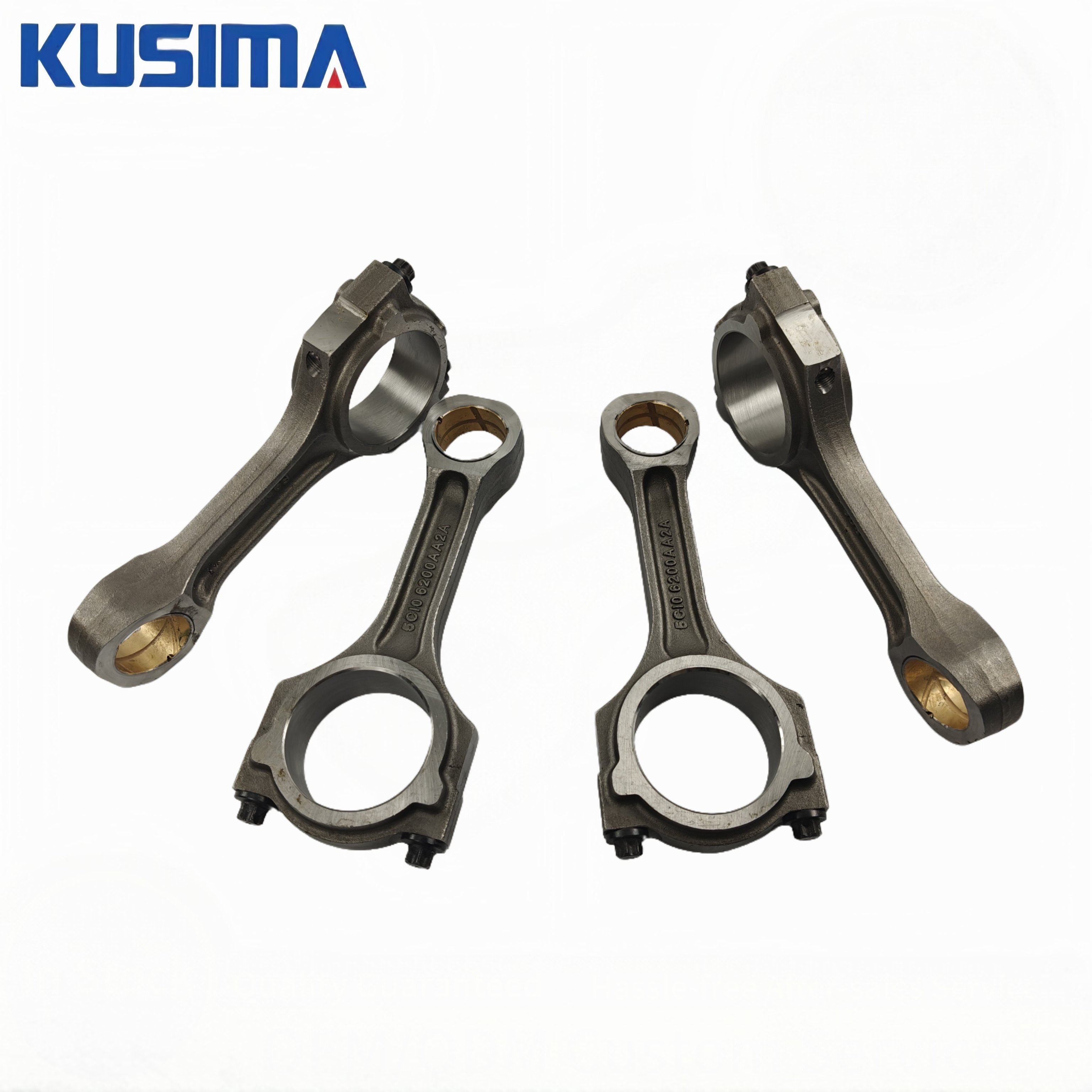
The gap between "bolted together" and "truly built"
Walk into any engine rebuilding shop and you will see the same scene: technicians torqueing fasteners, checking clearances, sliding pistons into bores. On paper, two assemblies might look identical—same parts, same torque specs, same shop manual. But put them on a dyno, and the difference shows up fast. One engine purrs through the break-in. The other burns oil, knocks at mid-range, or throws a code before the first oil change.
That gap comes down to one variable: testing. Not visual inspection. Not a quick spin of the crankshaft. Real testing under load, with data logged against known baselines.
Factory-tested engine assemblies go through a gauntlet that most rebuilds never see. And that process separates engines that last from engines that come back.
What actually happens during a factory test cycle
A proper factory test is not a simple "does it start" check. The assembly gets coupled to a dynamometer—typically an eddy-current or AC dyno—and run through a programmed sequence that mimics real-world operating conditions. The sequence varies by application, but the structure is consistent: idle stabilization, progressive load ramps, steady-state holds at key RPM points, and transient response checks.
During this cycle, sensors track oil pressure, coolant temperature, exhaust gas temperature, fuel consumption, knock activity, and vibration signatures. Some facilities log over 1,200 parameters across a single test run. The data gets compared against acceptance windows. Any parameter that drifts outside its band triggers a flag.
One engine assembly line in the Midwest runs a 45-minute hot test on every unit. That is 45 minutes of monitored operation before the engine ever sees a vehicle chassis. Compare that to the typical rebuild shop, where the first real run happens inside the engine bay of a customer's car—with no instrumentation beyond the dashboard gauge.
A real case: the 3.0L diesel that came back twice
A fleet operator in the Pacific Northwest ran a mixed fleet of light-duty trucks with a popular 3.0L diesel. Over 18 months, six engines from a reman supplier failed before 40,000 miles—all with similar symptoms: excessive blow-by, low oil pressure at hot idle, and premature cam follower wear.
The supplier replaced three of them under adjustment terms. The replacements failed too.
When the fleet switched to factory-tested long blocks from a different source, the failure pattern stopped. The difference was not in the parts. Both suppliers used OEM-grade pistons, rings, and bearings. The difference was in the test regimen. The failing supplier did a cold motoring test—spin the engine with an electric motor, check that oil pressure comes up, call it good. The factory-tested supplier ran a full hot dyno break-in with load cells measuring torque at every step. They caught a subtle injector imbalance on the first batch that would have turned into a scored cylinder at 30,000 miles.
That batch never made it to the fleet.
Hard numbers on what testing catches
The automotive industry has published data on the effectiveness of end-of-line testing. According to quality benchmarks from engine production facilities, functional hot testing detects roughly 10 to 15 percent of assembly-related defects that pass cold test screens. That may not sound like much until you consider what that percentage represents: oil gallery debris that only dislodges under thermal expansion, ring seal issues that only show up under combustion pressure, and valvetrain noise that only appears at specific resonance frequencies.
Here is a comparison of what different test methods actually catch:
| Defect Type | Visual Inspection | Cold Motoring Test | Hot Dyno Test |
|---|---|---|---|
| Torque-related fastener issues | Low | Low | Moderate |
| Oil pressure irregularities | None | Moderate | High |
| Ring seal / blow-by problems | None | Low | High |
| Injector or fuel system imbalance | None | None | High |
| Valvetrain noise / timing issues | Low | Moderate | High |
| Coolant system leaks | None | Low | Moderate |
The cold test is better than nothing. It confirms that the rotating assembly turns freely and that the oil pump primes. But it does not validate how the engine behaves at operating temperature, under load, or during transient throttle changes. Those are exactly the conditions where most premature failures originate.
Standards that separate serious suppliers from the rest
There is a reason why IATF 16949—the automotive quality management standard—places such heavy emphasis on in-process verification and end-of-line functional testing. The standard requires not just that tests exist, but that test data is recorded, analyzed, and fed back into the assembly process. That feedback loop is what drives continuous improvement.
Suppliers operating under IATF 16949 typically implement a layered testing strategy: in-process checks during assembly, an end-of-line cold test for basic functionality, and a hot test for performance validation. Each layer catches defects that the previous layer missed.
ISO 16232 adds another dimension: particulate contamination control. Factory-tested assemblies are built in environments where airborne particle counts are monitored. The same standard applies to the fluids used during test runs. Contaminated test oil can mask issues or introduce new ones. A facility that follows ISO 16232 knows exactly what is in its test loop.
The hard truth about "ran fine on the stand"
Some shop rebuilds come with a test stand certificate. The engine started, oil pressure came up, no unusual noises. That is not a test. That is a confirmation that the engine is not obviously broken.
Real testing exposes weaknesses. It finds the oil pump that loses pressure when the oil gets hot. It finds the piston that is 0.0005 inches too small for its bore when thermal expansion is factored in. It finds the valvetrain component that ticks only at 2,800 RPM.
Factory testing also validates the assembly process itself. If three consecutive engines show high oil consumption on the dyno, the production line stops. The root cause gets investigated. Maybe a batch of piston rings was mislabeled. Maybe a torque wrench drifted out of calibration. Maybe the assembly fixture shifted. The test data points to where the problem lives.
That kind of closed-loop quality control does not happen in a shop that bolts an engine together and ships it.
What testing cannot do—and why that matters
No amount of factory testing guarantees that an engine will never fail. Testing is a snapshot. It captures performance at a specific moment, under specific conditions. It does not predict how the engine will respond to a neglected air filter, extended oil change intervals, or a driver who redlines it cold every morning.
What testing does provide is a baseline. A factory-tested engine leaves the line with documented performance data. That data becomes the reference point for future diagnostics. When something goes wrong, the question is not "was this engine built right?"—the question is "what changed?"
That distinction matters for shops and fleet managers who need to isolate failure causes without guessing.
The takeaway from the dyno room
Factory-tested engine assemblies carry a different pedigree than untested rebuilds. The testing process is not marketing. It is engineering discipline applied at the point of manufacture. It catches defects that visual inspection and cold starts cannot see. It generates data that feeds back into the assembly line. And it gives the end user something valuable: confidence that the engine was right before it left the building.
For operations that depend on uptime—truck fleets, construction equipment, agricultural machinery—that confidence translates directly into lower diagnostic time and fewer repeat repairs. The extra cost of a tested assembly pays for itself the first time a problem does not come back.
Hebei Haodun Auto Parts Sales Co., Ltd. operates with test protocols that align with these industry standards, ensuring that every assembly that leaves the facility has been validated under real operating conditions before it reaches the customer.
Table of Contents
- The gap between "bolted together" and "truly built"
- What actually happens during a factory test cycle
- A real case: the 3.0L diesel that came back twice
- Hard numbers on what testing catches
- Standards that separate serious suppliers from the rest
- The hard truth about "ran fine on the stand"
- What testing cannot do—and why that matters
- The takeaway from the dyno room