
 EN
EN
The Sounds That Should Never Be Ignored
Crankshaft bearings don't fail without warning. They talk—through noises, pressure changes, and the debris they leave behind in the oil. The problem is that many of these signals get dismissed as "just engine noise" or "probably nothing serious" until the damage becomes expensive and irreversible.
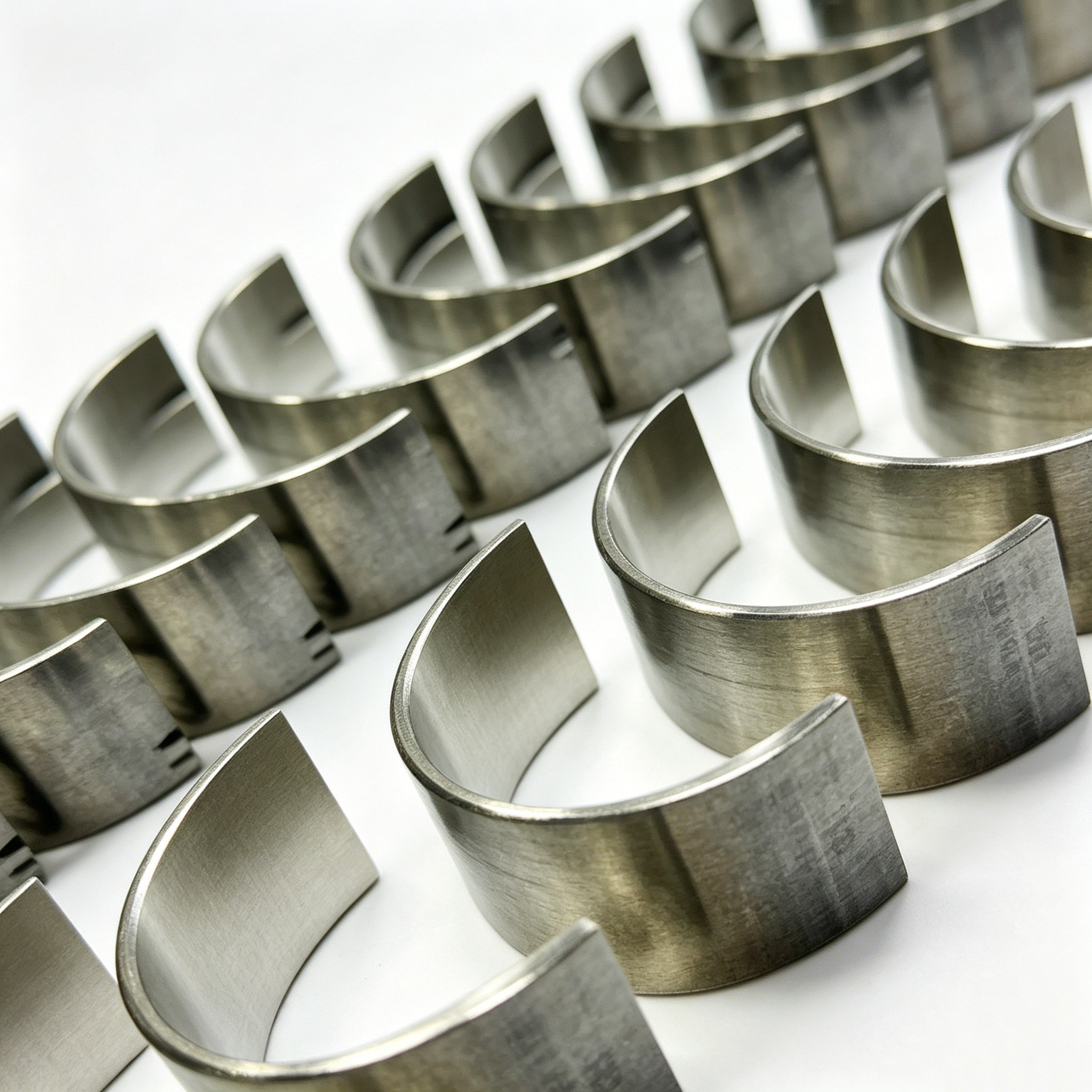
The crankshaft bearing sits between the crankshaft and the engine block, supporting the rotating assembly while managing the immense forces generated by combustion. When these bearings wear, the clearance between the bearing and journal increases. Oil pressure drops. Metal contacts metal. And the engine starts telling you something is wrong.
The Knock That Gets Deeper With Load
A rhythmic knocking or thumping sound from the lower engine is the classic symptom of worn crankshaft bearings. This isn't the sharp tick of valvetrain noise or the light tap of injectors. It's a deeper, more hollow sound that follows engine speed—one knock per revolution for main bearing wear, or a more pronounced knock that intensifies under load.
The technical term is "rod knock" when it involves the connecting rod bearings, but main bearing noise presents similarly: dull thuds or knocks that occur on every engine revolution. The sound tends to be most noticeable during acceleration or when the engine is working hard. At idle, it may fade or disappear entirely, leading some to believe the problem has resolved itself. It hasn't.
A shop in the Midwest once had a fleet truck come in with an intermittent knock that only appeared when climbing grades. The driver had been running it for three weeks, assuming it was a loose heat shield. By the time it reached the shop, the crankshaft had scored so badly that the entire rotating assembly needed replacement. The bearing shells had worn through to the copper layer—and the repair bill was five figures.
Oil Pressure That Drops at Hot Idle
Worn bearings increase the oil clearance, which means more oil flows through the gap instead of maintaining system pressure. The oil pump moves a fixed volume of fluid; if that fluid escapes through enlarged bearing clearances, pressure drops.
The symptom often shows up as a low oil pressure warning at hot idle. Cold oil is thicker and maintains pressure more easily. As the engine warms up and oil thins, the pressure falls. If the gauge or light flickers when sitting at a stoplight but returns to normal while driving, that's a strong indicator of bearing wear.
This symptom is insidious because it creeps up gradually. The pressure might drop from 40 psi to 35 psi over several months, then to 30 psi. Each incremental drop goes unnoticed until the warning light starts flickering—by which point the bearings are already significantly worn.
Metal Shavings and the Copper Sheen
Normal bearing wear produces a fine aluminum powder in the oil—a silver dust that might catch the light on a dipstick but doesn't form distinct particles. Worn bearings, however, shed material in larger pieces. When bearing wear accelerates, the oil will contain visible silver shavings or, in more advanced cases, a copper sheen.
Many engine bearings are constructed with three layers: a steel backing, a middle layer of copper, and a soft aluminum overlay. When the aluminum overlay wears through, the copper layer becomes exposed and begins to shed. Copper-colored debris in the oil or on the drain plug magnet is a late-stage warning.
Check the oil during changes. If the drain pan shows glitter or the filter contains metallic particles, the bearings are shedding material. At that point, the clock is ticking.
Rough Idle and Performance That Feels Off
Worn crankshaft bearings don't just make noise and drop oil pressure—they also affect how the engine runs. The increased clearance allows the crankshaft to move more than it should, which can affect timing, firing consistency, and overall smoothness.
Some engines develop a rough idle that mechanics initially attribute to fuel or ignition issues. Others show a slight vibration that becomes more noticeable at certain RPM ranges. The engine might feel sluggish during acceleration or hesitate when transitioning from idle to load.
These symptoms are easy to misdiagnose because they overlap with so many other problems. But when rough idle appears alongside knocking or low oil pressure, the bearings should be the first place to look, not the last.
Hard Starting When Hot and the Threat of Seizure
In advanced cases, worn bearings can make the engine difficult to rotate once it reaches operating temperature. The bearing material may have worn unevenly, creating high spots that bind as the components expand with heat. The engine might crank slowly when hot or, in extreme cases, refuse to crank at all until it cools down.
This is the stage just before seizure. If the engine locks up while running, the results are catastrophic—broken connecting rods, damaged cylinder walls, and a crankshaft that may need to be machined or replaced entirely.
| Symptom | Early Stage | Advanced Stage |
|---|---|---|
| Engine noise | Intermittent knock under load | Constant knocking, audible at idle |
| Oil pressure | Slight drop at hot idle | Warning light flickers or stays on |
| Oil condition | Fine aluminum dust | Visible shavings, copper sheen |
| Starting behavior | Normal | Hard to crank when hot |
| Engine performance | Subtle roughness | Noticeable vibration, loss of power |
Catching bearing wear early means replacing bearings and possibly polishing the crankshaft. Catching it late means replacing the crankshaft, connecting rods, and sometimes the entire engine block. The difference in cost and downtime is substantial.
For fleet operators and rebuilders who need reliable replacement bearings, suppliers with consistent metallurgy and dimensional control make a tangible difference. Hebei Haodun's engine bearing offerings are produced with attention to these very tolerances—because in rotating assemblies, a few thousandths of an inch can be the difference between a reliable rebuild and a repeat failure.